Vật Liệu:
1 tí thịt băm và tôm băm 2-3 trái bắp to vừa bào mỏng (nếu là bắp trắng thì thêm vào chút bột nghệ cho màu vàng thêm đẹp)
2 tép hành lá cắt nhỏ
1 ít ngò cắt nhỏ
1-2 trái ớt băm nhỏ
1 tsp bột nêm
1 tsp đường
Chút tiêu
1 cái trứng
2 muỗng tbsps bột chiên giòn Thái
1 muỗng bột gạo
1 muỗng bột AP
Cách Làm:
Mix all hỗn hợp trên , nêm vừa ý. Cho dầu vào chảo dạng chiên cá, múc từng muỗng bắp vào chiên vàng rồi lật mặt bên kia. Vớt ra dùng nóng với dưa leo chua rất ngon.
Showing posts with label Bánh Mặn. Show all posts
Tuesday, January 8, 2013
Monday, March 5, 2012
PUFF PASTRY CUỐN TÔM AND BACON
Nhân bánh: (bao nhiêu tùy y' thích nha)
Bell pepper xanh, đỏ, vàng cut hạt lựu nhỏ
Hành tím cắt hạt lựu
Hành tỏi băm nhỏ
1 ít bacon cắt nhỏ
Chê ese bào sẵn (trắng and vàng, loại ăn taco á)
1 chút mayo sauce
Tôm lột vỏ chà sạch lau khô cắt nhỏ vừa
1 ít hành lá and ngò băm nhỏ
Puff pastry, bao nhiêu tùy y'
Mè
Trứng phết mặt bánh (lòng đỏ only)
Cách Làm:
Tan đá puff pastry, but đừng có nhão nhen., chi tan đá, rồi dùng nĩa xăm vào puff pastry để giảm bớt độ phồng của bánh.
Cho bacon vào chảo chấy cho ra hết mỡ vớt ra thấm mỡ . Chắt bỏ bớt mỡ trong chảo bỏ , save lại 1 ít phi tỏi hành cho thơm, cho tôm vào stir lẹ rồi tắt lửa. Cho bell pepper, hành vào, đảo nhe., sau đó nêm tí bột nêm and đuờng and tiêu. Đảo đều nhắc ra cho vào hành ngò băm. Trộn đều. Sau đo' chắt bớt nước (nếu có) cho ráo nhân. Trộn vào nhân bacon, cheêse (ý thích cho vào nhiều hay ít, nhiều quá ngán lắm) 1 it mayo sauce. Trộn đều .
Trãi mìếng puff pastry ra cho 1 ít nhân lên rồi cuộn lại (đúng 1 lớp thôi nhen) Sau đó cut xéo theo bite size mình thích. Xếp lên khay baking có thoa tí dầu . Phết lên mặt bánh 1 lớp lòng đỏ trứng rồi mới rắc mè lên. Đem bánh bake with preheated oven 400F for cở 20-25 mins. là done. Hay có thể check khi bánh vàng gòn đều là được.
Bánh này EL làm nhiều rau (bell pepper) ít cheese and ít mayo. sauce thôi, ăn đỡ ngán . Chủ yếu là mùi vị thơm ngon là đạt tiêu chuẩn để bốc nhen. Món này của EL hôm qua super hot á, con nít hay người lớn cũng ăn ghiền luôn :). and bánh phải giòn đều ngon. Nếu làm xong khách chưa tới thì nhớ kept warm để bánh nóng giòn cho ngon nha .
Saturday, February 4, 2012
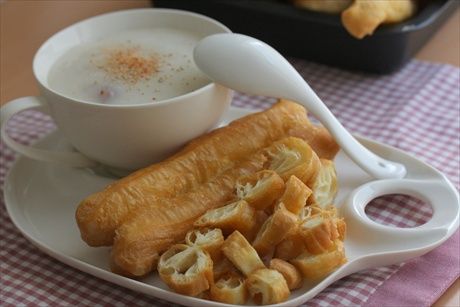
Dầu Cháo Quẩy - Chinese Cruller
- 5g muối
- 10g đường
- 5g bột khai
- 5g baking soda
- 500g bột mỳ đa dụng
Trộn bột:1) Trộn bột và muối, đường cho đều.2) Lấy từ tổng số 250-300ml nước: Hòa tan 5g bột khai vào 50ml nước. Hòa tan 5g baking soda vào trong 50ml nước.
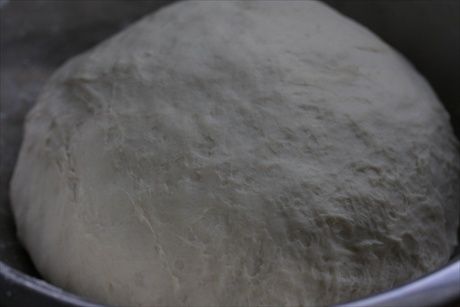
3) Đổ nước bột khai và nước baking soda vào bột, dùng đũa khuấy đều. Cho từ từ số nước còn lại vào bột, vừa đổ vừa khuấy. Dùng tay nhào bột, làm quẩy không cần đến mixer, công việc khá nhẹ nhàng. Sau khi nhào vài phút, mặt khối bột sẽ thô, như hình dưới:
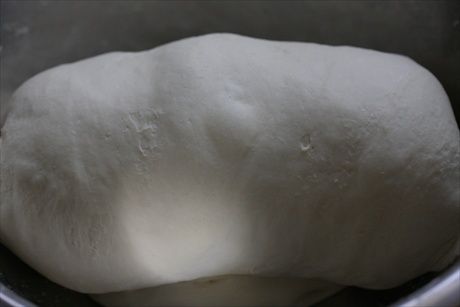
Ủ bột:1) Đậy bột lại, để nghỉ 20′. Tiếp tục nhào khoảng 1-2′ nữa. Mặt bột sau lần 2 sẽ trở nên mịn hơn:
2) Tiếp tục đậy bột lại, để nghỉ 20′ nữa. Lặp lại việc nhồi bột. Sau lần này, bề mặt khối bột đã trở nên mịn hơn:
4) Sau thời gian này, dàn bột thành hình chữ nhật dài có cạnh dài 10-12cm, dày khoảng 1.2-1.5cm. Đậy khăn ẩm lên trên. Lần này để bột nghỉ 3-4h (tức là mình có thể đi ăn trưa và ngủ một giấc sang đến chiều
).
Cán bột và chiên quẩy:
1) Đặt chảo dầu lên bếp, dầu cần ngập quẩy, nên cao khoảng 3.5-4cm. Dùng chảo/xoong đường kính dài hơn chiều dài thân quẩy.
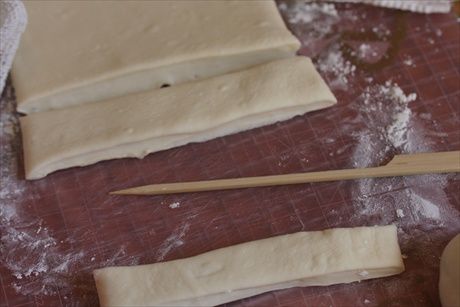
2) Dùng dụng cụ cán bột, cán cho mỏng khối bột (nếu làm quẩy giòn). Dùng dao cắt miếng bột rộng 2cm. Nếu muốn quẩy ngắn thì cắt đôi chiều dài.
5) Chảo dầu sôi, giảm nhỏ lửa, cầm miếng bột kéo dài gấp rưỡi hoặc gấp đôi và nhẹ nhàng thả vào chảo dầu. Dùng đũa trở và dìm nhẹ (giống kỹ thuật chiên bánh tiêu). Quẩy sẽ nở phồng, hai chân quẩy dính vào nhau, hơi tách ở hai đầu. Chiên lửa vừa đến khi vàng. Quẩy cần nở hết, nếu không trong ruột sẽ có vị khai. Nếu thích quẩy thật giòn, chiên hai lửa.
Làm quẩy cần có 2 người, một người cắt và một người đứng chiên, làm liên tục sẽ tiết kiệm thời gian hơn.
Ingredients (makes 10, 6"):
1 cup water
2 cups bread flour
¼ tsp instant yeast
1 tsp sugar
½ tsp baking soda
¾ tsp alum
½ tsp ammonia/nutre powder (I did not use this)
1 tsp salt
1 tbsp vegetable oil
*Oil for deep-fry
Directions:
- Put all ingredients into the bread maker. Select dough mode and turn in on.
- Once the kneading is completed, turn the dough out on a floured surface. This dough is stickier than bread dough so remember to dust lot of four on the working table.
- Divide dough into two portions and shape each one into a 40cm long rod. Cover dough withplastic wrap and let raise for 45 minutes.
- Lightly flatten the dough (approx. 1cm thick and 5cm wide) and cut into 2cm strips. Let stand for 10-15 minutes.
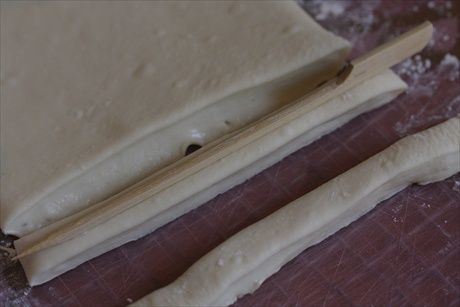
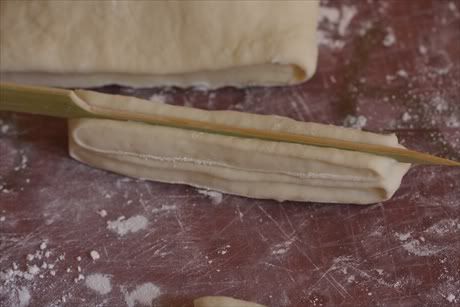
- Heat oil in a medium pot or wok. Dip the skewer in water and wet the middle of dough as show
- Place another piece of dough on the top and press in the middle with a skewer. Hold both ends and pull the dough until 20cm long. Then carefully put it into the hot oil straight away. Stir rapidly as soon as the dough is surfaced, and deep fry until golden browned.
Friday, January 20, 2012
Classic Croissants
copy from Jeffrey Hamelman
Ingredients:
1 lb. 2 oz. (4 cups) unbleached all-purpose flour; more for rolling
5 oz. (1/2cup plus 2 Tbs.) cold water
5 oz. (1/2 cup plus 2 Tbs.) cold whole milk
2 oz. (1/4 cup plus 2 Tbs.) granulated sugar
1-1/2 oz. (3 Tbs.) soft unsalted butter
1 Tbs. plus scant 1/2 tsp. instant yeast
2-1/4 tsp. table salt
1 lb. 2 oz. (4 cups) unbleached all-purpose flour; more for rolling
5 oz. (1/2cup plus 2 Tbs.) cold water
5 oz. (1/2 cup plus 2 Tbs.) cold whole milk
2 oz. (1/4 cup plus 2 Tbs.) granulated sugar
1-1/2 oz. (3 Tbs.) soft unsalted butter
1 Tbs. plus scant 1/2 tsp. instant yeast
2-1/4 tsp. table salt
For the butter layer
10 oz. (1-1/4 cups) cold unsalted butter
For the egg wash
1 large egg
1 large egg
Make the dough
Combine all of the dough ingredients in the bowl of a stand mixer fitted with the dough hook. Mix on low speed for 3 minutes, scraping the sides of the mixing bowl once if necessary. Mix on medium speed for 3 minutes. Transfer the dough to a lightly floured 10-inch pie pan or a dinner plate. Lightly flour the top of the dough and wrap well with plastic so it doesn’t dry out. Refrigerate overnight.
Make the butter layerThe next day, cut the cold butter lengthwise into 1/2-inch-thick slabs. Arrange the pieces on a piece of parchment or waxed paper to form a 5- to 6-inch square, cutting the butter crosswise as necessary to fit. Top with another piece of parchment or waxed paper. With a rolling pin, pound the butter with light, even strokes. As the pieces begin to adhere, use more force. Pound the butter until it’s about 7-1/2 inches square and then trim the edges of the butter. Put the trimmings on top of the square and pound them in lightly with the rolling pin. Refrigerate while you roll out the dough.
Unwrap and lay the dough on a lightly floured work surface. Roll into a 10-1/2-inch square. Brush excess flour off the dough. Remove the butter from the refrigerator—it should be pliable but cold. If not, refrigerate a bit longer. Unwrap and place the butter on the dough so that the points of the butter square are centered along the sides of the dough. Fold one flap of dough over the butter toward you, stretching it slightly so that the point just reaches the center of the butter. Repeat with the other flaps . Then press the edges together to completely seal the butter inside the dough. (A complete seal ensures butter won’t escape.)Lightly flour the top and bottom of the dough. With the rolling pin, firmly press the dough to elongate it slightly and then begin rolling instead of pressing, focusing on lengthening rather than widening the dough and keeping the edges straight.
Roll the dough until it’s 8 by 24 inches. If the ends lose their square shape, gently reshape the corners with your hands. Brush any flour off the dough. Pick up one short end of the dough and fold it back over the dough, leaving one-third of the other end of dough exposed. Brush the flour off and then fold the exposed dough over the folded side. Put the dough on a baking sheet, cover with plastic wrap, and freeze for 20 minutes to relax and chill the dough.
Repeat the rolling and folding, this time rolling in the direction of the two open ends until the dough is about 8 by 24 inches. Fold the dough in thirds again, as shown in the photo above, brushing off excess flour and turning under any rounded edges or short ends with exposed or smeared layers. Cover and freeze for another 20 minutes.
Give the dough a third rolling and folding. Put the dough on the baking sheet and cover with plastic wrap, tucking the plastic under all four sides. Refrigerate overnight.
Divide the doughThe next day, unwrap and lightly flour the top and bottom of the dough. With the rolling pin, “wake the dough up” by pressing firmly along its length—you don’t want to widen the dough but simply begin to lengthen it with these first strokes. Roll the dough into a long and narrow strip, 8 inches by about 44 inches. If the dough sticks as you roll, sprinkle with flour. Once the dough is about half to two-thirds of its final length, it may start to resist rolling and even shrink back. If this happens, fold the dough in thirds, cover, and refrigerate for about 10 minutes; then unfold the dough and finish rolling. Lift the dough an inch or so off the table at its midpoint and allow it to shrink from both sides—this helps prevent the dough from shrinking when it’s cut. Check that there’s enough excess dough on either end to allow you to trim the ends so they’re straight and the strip of dough is 40 inches long. Trim the dough.
Lay a yardstick or tape measure lengthwise along the top of the dough. With a knife, mark the top of the dough at 5-inch intervals along the length (there will be 7 marks in all). Position the yardstick along the bottom of the dough. Make a mark 2-1/2 inches in from the end of the dough. Make marks at 5-inch intervals from this point all along the bottom of the dough. You’ll have 8 marks that fall halfway between the marks at the top.Shape the remaining croissants in the same manner, arranging them on two large parchment-lined rimmed baking sheets (8 on one pan and 7 on the other). Keep as much space as possible between them, as they will rise during the final proofing and again when baked.
Refrigerate the remaining egg wash (you’ll need it again). Put the croissants in a draft-free spot at 75° to 80°F. Wherever you proof them, be sure the temperature is not so warm that the butter melts out of the dough. They will take 1-1/2 to 2 hours to fully proof. You’ll know they’re ready if you can see the layers of dough when the croissants are viewed from the side, and if you shake the sheets, the croissants will wiggle. Finally, the croissants will be distinctly larger (though not doubled) than they were when first shaped.Bake the croissantsShortly before the croissants are fully proofed, position racks in the top and lower thirds of the oven and heat it to 400°F convection, or 425°F conventional. Brush the croissants with egg wash a second time. Put the sheets in the oven. After 10 minutes, rotate the sheets and swap their positions. Continue baking until the bottoms are an even brown, the tops richly browned, and the edges show signs of coloring, another 8 to 10 minutes. If they appear to be darkening too quickly during baking, lower the oven temperature by 10°F. Let cool on baking sheets on racks.
make ahead tips
The croissants are best served barely warm. However, they reheat very well, so any that are not eaten right away can be reheated within a day or two in a 350°F oven for about 10 minutes. They can also be wrapped in plastic or aluminum foil and frozen for a month or more. Frozen croissants can be thawed overnight prior to reheating or taken from the freezer directly to the oven, in which case they will need a few minutes more to reheat.variations
Chocolate Croissants: Chop some good-quality bittersweet chocolate and distribute it along the length of the notched end of the dough triangle after you’ve stretched it—use about 1/2 oz. or 1-1/2 Tbs. for each one. Roll it up just like a plain croissant but without stretching out or bending the legs. Proof and bake the same.Ham and Cheese Croissants: After stretching but before rolling up each croissant, put a thin layer of sliced ham on the dough at the notched end. Tuck it in if it lies more than a little outside the surface of the dough. Put a layer of thinly sliced or grated cheese—good Cheddar or Gruyère is best—on top of the ham. Without stretching or bending the legs, roll the dough tightly. Proof and bake the same.
Thursday, January 19, 2012
Cơm Cháy Chiên Giòn (Crispy Rice Crackers)
|
Friday, January 13, 2012
Cách làm bánh canh
Nguyên liệu:
200g bột gạo
200g bột năng (nếu làm bún thì không bỏ bột năng, dùng bột gạo 400g)
1,5 cup nước sôi
2 muỗng canh dầu ăn
1 muỗng cafe muối
200g bột năng (nếu làm bún thì không bỏ bột năng, dùng bột gạo 400g)
1,5 cup nước sôi
2 muỗng canh dầu ăn
1 muỗng cafe muối
Cách làm:
Bột gạo, bột năng, muối, dầu ăn bỏ vô một tô lớn hoặc thau trộn đều
Chế 1,5 cup nước sôi, dùng móc chân quay của Handmixer để số nhỏ nhất nhồi(cho bột khỏ văng ra ngoài) rồi từ từ tăng tốc lên medium, nhồi bột cho đến khi bột mịn, dẽo.
Trong khi nhồi bột thì nấu nồi nước sôi (nước cao gần tời miệng nồi) để bánh canh(bún) không bị dính chùm nên cho 1 muỗng dầu ăn vào nồi nước
Chuẩn bị một nồi nước lạnh kế bên nồi nước luộc bánh canh (bún)
Múc bột bỏ vào đồ ép và ép vào nồi
Bánh Căn
Vật liệu:
- 1 kg gạo lúa gòn thơm
- 1 chén cơm khô (cơm chín phơi khô – Bí quyết để làm bột bánh căn) hoặc cơm nguội
- 1 khuôn bằng lò đất
- Hẹ, dầu ăn, tôm tươi
- 2 trái cà chua chín (ớt tỏi chanh - tùy ý)
- Mắm, đường, bột ngọt, ớt, tỏi.
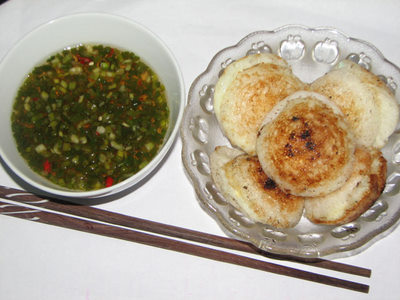
Về cách làm thì gạo và cơm khô ngâm chung với nước qua đêm. Xay nhuyễn thành bột. Pha nước cho vừa. Xong làm dầu hẹ. Hẹ được rửa sạch xắt nhỏ, cho dầu ăn vào chảo, dầu ăn sôi khử tỏi. Ðổ hẹ vào chảo dầu trộn đều xong nhắc ra.
NOTE: Bánh căn ngon phụ thuộc ba yếu tố: gạo, mắm và mỡ hành. Gạo xay bột làm bánh căn phải là gạo cũ (nở), chiếc bánh mới giòn, nếu làm gạo mới (dẻo), bánh bị nhão, sít khuôn không nạy được. Bí quyết để đúc được cái bánh căn ngon (dai, ráo) là phải có ít cơm nguội trộn vào gạo khi đem đi xay bột. Nước mắm ăn bánh căn là nước mắm ớt tỏi. Tùy theo khẩu vị từng gia đình, có gia đình pha mắm ớt tỏi có chanh, có gia đình thay chanh bằng thơm, có gia đình lại bằng cà chua. Ngon hay dở quyết định ở nước mắm !
- 1 kg gạo lúa gòn thơm
- 1 chén cơm khô (cơm chín phơi khô – Bí quyết để làm bột bánh căn) hoặc cơm nguội
- 1 khuôn bằng lò đất
- Hẹ, dầu ăn, tôm tươi
- 2 trái cà chua chín (ớt tỏi chanh - tùy ý)
- Mắm, đường, bột ngọt, ớt, tỏi.
Về cách làm thì gạo và cơm khô ngâm chung với nước qua đêm. Xay nhuyễn thành bột. Pha nước cho vừa. Xong làm dầu hẹ. Hẹ được rửa sạch xắt nhỏ, cho dầu ăn vào chảo, dầu ăn sôi khử tỏi. Ðổ hẹ vào chảo dầu trộn đều xong nhắc ra.
NOTE: Bánh căn ngon phụ thuộc ba yếu tố: gạo, mắm và mỡ hành. Gạo xay bột làm bánh căn phải là gạo cũ (nở), chiếc bánh mới giòn, nếu làm gạo mới (dẻo), bánh bị nhão, sít khuôn không nạy được. Bí quyết để đúc được cái bánh căn ngon (dai, ráo) là phải có ít cơm nguội trộn vào gạo khi đem đi xay bột. Nước mắm ăn bánh căn là nước mắm ớt tỏi. Tùy theo khẩu vị từng gia đình, có gia đình pha mắm ớt tỏi có chanh, có gia đình thay chanh bằng thơm, có gia đình lại bằng cà chua. Ngon hay dở quyết định ở nước mắm !
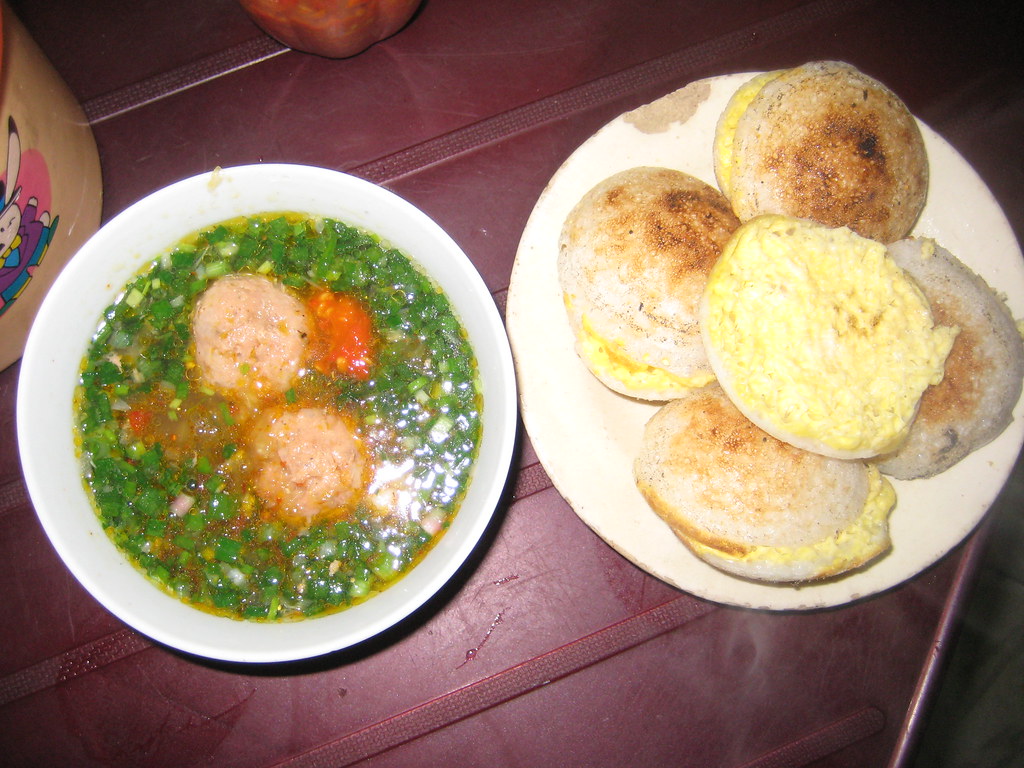
Bánh căn phải ăn với mỡ hành mới ngon, nhưng cũng có người thích thay hành bằng hẹ. Để bánh căn có “chất “ hơn, người ta chế biến bằng cách đúc bánh căn với trứng, thịt bò hay mực. Người nhà quê ăn bánh căn với nước mắm có pha thêm nước cá nấu ngót (cá bò, cá chấm, cá liệt, cá thu…). Những hàng bánh căn ở thành phố biến tấu thay nước cá bằng nước và thịt xíu mại. |
Wednesday, July 6, 2011
Bánh Căn
Vật liệu:
- 1 kg gạo lúa gòn thơm
- 1 chén cơm khô (cơm chín phơi khô – Bí quyết để làm bột bánh căn) hoặc cơm nguội
- 1 khuôn bằng lò đất
- Hẹ, dầu ăn, tôm tươi
- 2 trái cà chua chín (ớt tỏi chanh - tùy ý)
- Mắm, đường, bột ngọt, ớt, tỏi.
Về cách làm thì gạo và cơm khô ngâm chung với nước qua đêm. Xay nhuyễn thành bột. Pha nước cho vừa. Xong làm dầu hẹ hay hành lá. Hẹ được rửa sạch xắt nhỏ, cho dầu ăn vào chảo, dầu ăn sôi khử tỏi. Ðổ hẹ vào chảo dầu trộn đều xong nhắc ra.
Bánh căn phải ăn với mỡ hành mới ngon, nhưng cũng có người thích thay hành bằng hẹ. Để bánh căn có “chất “ hơn, người ta chế biến bằng cách đúc bánh căn với trứng, thịt bò hay mực. Người nhà quê ăn bánh căn với nước mắm có pha thêm nước cá nấu ngót (cá bò, cá chấm, cá liệt, cá thu…). Những hàng bánh căn ở thành phố biến tấu thay nước cá bằng nước và thịt xíu mại. |
Saturday, June 25, 2011
BÁNH QUAI VẠC HAY BÁNH LỌC TRẦN
Nhân Bánh :
Thịt ướp với hành tím, tiêu, nước mắm, đường. Ướp thấm cở vài tiếng. Tôm cũng ướp y chang nhưng cho thêm tí tỏi băm nữa nha.
Tôm cũng vậy, rim cho săn như kho/ram mặn mặn ngọt ngọt là được.
Bột vỏ bánh:
1 gói bột năng 14 ỏ 16 oz
1 1/2 cup nước
1/2 tsp salt
Nước thật sôi. Khoét 1 lổ giữa bột khô, chế nước sôi vào. Dùng c'ai muỗng trộn từ từ nước với bột cho hết. Sau đó dùng tay nhồi cho dẻo bột hoặc dùng stand mixer có thể thêm chút xíu bột khô nếu cần. Khi nhồi dẻo rồi thì dùng plastic wrapper bao lại cho bột không bị khô trong lúc nặn bánh.
Bột sau khi nhồi dẻo thì nắn từng miếng tròn như thế này nè. Không cần dùng đồ cán bột đâu. Chỉ cần ngắt cục bột nặn ra thành cái hình tròn là done hà :) dễ lắm. Bột bắt càng mỏng thì bánh càng clear như pha lê see thru. nhân bên trong rất đẹp.
Cho nhân vào giữa bánh.
Luộc bánh bằng nước sôi, khi bánh nổi lên thì vớt ra thả vào thau nước nguội (nước đã đun sôi). Khi bánh trong thì vớt ra, bày vào đĩa. Thêm ít mỡ hành va nước mắm ngọt ngọt là sẵn sàng cho măm măm rồi.
Making Dough
1 bag of tapioca flour
1 1/2 cup of boiling water
1/2 tsp saltEmpty a bag of flour in a mixing bowl. Pour 1 cup of boiling water over the flour. Kneed it with your hand palms until dough doesn't stick to the bowl or your hands. Dough should be warm and soft. Put it in a ziploc bag to keep it from being dried.
Making Pork and Shrimp Filling
1/4 pound of lean pork ((fattier pork or thit ba chi can be used as the traditional bánh bột lọc requires), cut into small cubes
1/4 pound of shrimp, deveined and cut into 3-4 pieces
1/4 cup of shredded wood ear mushroom, soaked (optional)
1 tablespoon fish sauce
2 tablespoon sugar
1 teaspoon black pepper
2-3 cloves of garlic, finely chopped
1 shallots, finely sliced
2 teaspoons of oil
Heat oil in a pan, add garlic, shallots and stir until it's golden. Add the remaining ingredients and simmers for about 20-30 minutes. You can cook separate pork and shrimp or together. If need it, adjust sugar and salt until the meat tastes sweet and salty. When the sauce becomes thick and coats the pork and shrimp and the color changes to brown, remove it from heat.
Cooking Dumplings
Set aside a large bowl of cold or ice water.
Bring a pot of water to boil. While the water is boiling, add raw dumplings in it, lower the heat down to medium high. Boiling water could cause the bánh bột lọc to burst.
When dumplings are floating, wait for about 5 minutes or until dumplings are cooked before removing them with a strainer and pour them into a bowl of cold or ice water. Let them cool down for about 30 seconds, then scoop them up with a strainer and add them in a oil scallion pan. Sprinkle some fried scallions and dried shrimps. Serve Banh Quai Vat with dip fish sauce.
RECIPE:
add a little bit more sugar to it since banh Quai Vac's dipping sauce need to be a little bit sweeter.1 cup of water or coconut juice or coco soda
4 tablespoons of fresh lime juice or lemon juice
4 tablespoons of sugar
2 chilli peppers, finely mince
4 cloves of garlic, finely mince
1/4 cup fish sauce ( I prefer 3 crabs brand )
* * *Mix sugar and water in a bowl until disolved
Add fish sauce, lime juice, chilli pepper and garlic.
Adjust the ingredients to your liking.
Subscribe to:
Posts (Atom)